
Finding mouse droppings behind the kitchen bin on a Monday morning is no one’s idea of a good start to the week. You text the landlord. A few days later, the reply lands: “That’s a maintenance issue for the tenant.” If you’ve ever had a message like that, you’re far from alone, and you don’t necessarily have to accept it at face value.
Pest control in a rental property in Ireland is one of those areas where the rules are clearer than people think. The catch is that almost nobody explains them in everyday language. So let’s do that.
This guide is written for tenants renting privately in the Republic of Ireland. The rules are different in Northern Ireland, and council or approved housing body tenancies follow their own procedures, so check with your housing body or local authority if that’s your situation.
The most important question: how are they getting in?
Irish rental law doesn’t try to guess whose fault a pest problem is in a vague sense. It looks at what’s actually causing it.
If pests are getting into the property through gaps around pipes, drains, broken vents, cracks in walls, or other unsealed openings, that usually points to the landlord. If the issue is genuinely down to how the property is being lived in, things like food left out for long periods or open bins kept indoors, the responsibility can shift the other way.
So the first thing to focus on isn’t “did we keep the kitchen clean enough?” It’s “where are they actually coming from?”
What the rules say (in plain English)
A couple of pieces of Irish law sit behind all of this. You don’t need to memorise them, but it helps to know they exist:
- The Residential Tenancies Act 2004 says the landlord has to keep the structure of the home in repair.
- The Housing (Standards for Rented Houses) Regulations 2019 (S.I. No. 137/2019) say every rented home needs proper measures to keep pests out, and that bin storage has to be pest and vermin proof.
- The same Act says tenants have to keep the property in reasonable condition. Where a pest issue is genuinely caused by neglect on the tenant’s side, the landlord’s repair duty doesn’t apply to that part.
These are real requirements, not just general advice. Local authorities have powers to enforce them.
Why structural gaps usually point to the landlord
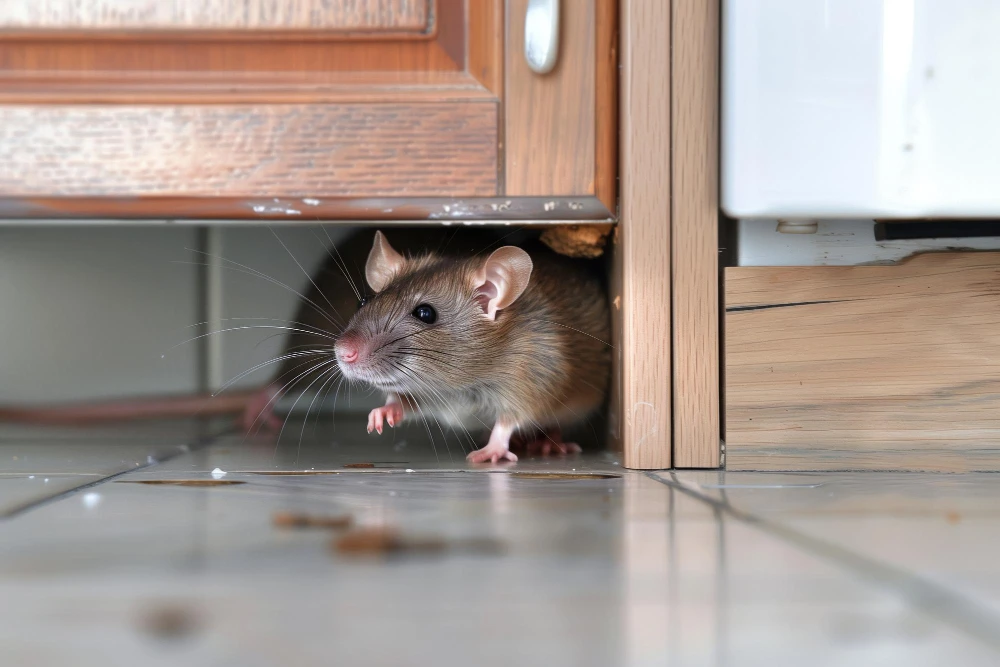
A 2019 Irish Times Property Clinic column put this nicely. Kersten Mehl, a Chartered Residential Agency Surveyor with the Society of Chartered Surveyors Ireland (SCSI), explained that rodent problems in rentals “invariably” come from unblocked access points near sewers, pipes, and drains, rather than from tenant hygiene. His view was that the landlord is the one who needs to investigate and resolve it.
That makes sense when you think about it. Without a way in, mice and rats can’t show up in your kitchen no matter what your bin habits are. So the entry point usually matters more than anything else.
Take a real example from that same column: a house share in Galway, five tenants, a clean home, bins kept closed. They start hearing scratching behind the cupboard. On a closer look, there are visible gaps around the pipes under the sink and where service cables come in from outside. In many cases like that, those entry points are part of the property structure, which makes them the landlord’s to deal with.
What if the pests were already there when you moved in?
If the problem was already happening when you arrived, or you can see entry points that clearly weren’t created by anyone living there now, you’ve got a strong case for the landlord to take it on.
The tricky part is proof. After a few months, it gets harder to show that something was already there at the start of the tenancy. This is where a written report from a pest control professional really helps. It moves the conversation away from “did the tenants leave crumbs out?” and onto “here are the actual entry points, and here’s how they’re being used.”
If you’re in Dublin and want this kind of documented inspection, providers like Ultimate Pest Control Dublin issue written reports that identify entry points and recommend proofing work. Even a short report can make a real difference when you’re trying to get a landlord to take the issue seriously.
When the tenant might be responsible
It’s worth being honest about this side too. If there’s no structural entry point and the problem genuinely seems to be coming from how the property is being lived in, things like food storage left open long term, very full bins kept inside, or pets’ food left out overnight, the responsibility can land with the tenant.
That doesn’t mean every minor housekeeping slip leaves you on the hook. It means the law looks at what actually caused the problem, and where the cause is on the tenant’s side, the landlord isn’t obliged to step in.
What if your lease says pests are your problem?
A lot of Irish tenancy agreements include a line saying the tenant looks after all pest control during the tenancy. Some landlords treat that as the end of the conversation.
It isn’t quite that simple. A lease clause does not automatically override the landlord’s repair responsibilities under Irish tenancy law. If the cause is structural, the clause doesn’t really apply to that part of the problem. Where the cause is genuinely tenant behaviour, the clause carries more weight.
It’s the same principle, just written into the lease: cause is what matters.
What to do if your landlord won’t help
If you’ve reported the issue and nothing’s happening, you have two routes you can use, and you can use both at the same time if you need to.
Route 1: Your local council’s Environmental Health Officer
Every local authority in Ireland (Dublin City Council, Cork City Council, Galway County Council, Waterford City and County Council, and the rest) has an environmental health team. They enforce the standards rules in rental properties.
You’ll usually find a complaints form or contact email on the environmental health page of your council’s website. If it’s not obvious, citizensinformation.ie has a good overview that points to the right local contact.
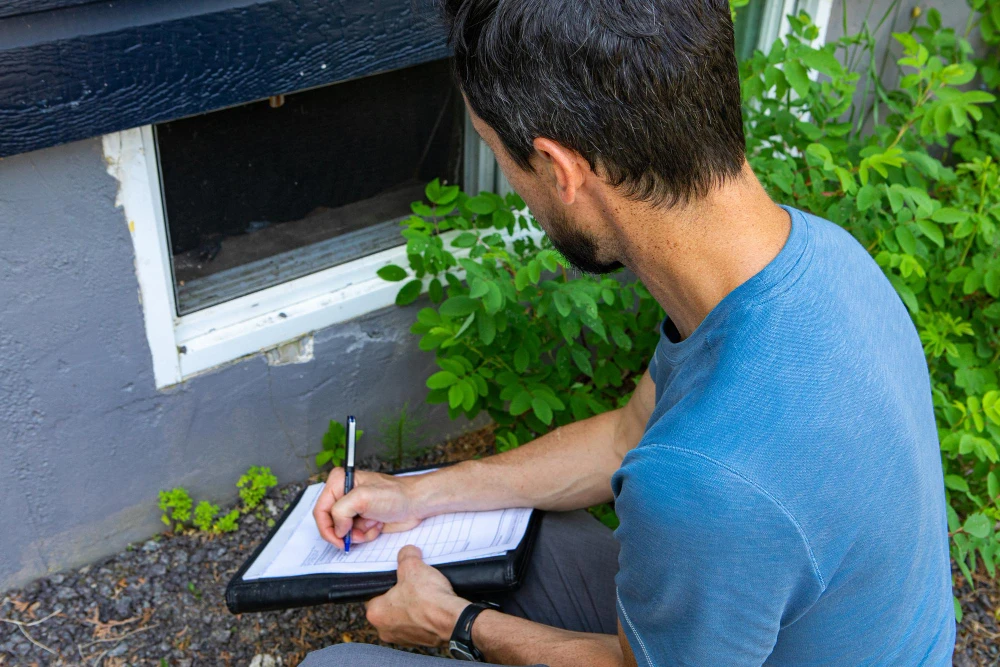
An Environmental Health Officer can come out, inspect the property, and, if they find a problem, issue an Improvement Letter, an Improvement Notice, or, in serious cases, a Prohibition Notice. These have legal weight, and a landlord who ignores them can end up in legal trouble.
For getting actual repairs done, this route is often the quickest.

Route 2: The Residential Tenancies Board (RTB)
The RTB handles disputes between landlords and tenants. If you’ve lost money because of the pest issue, on pest controllers you paid for, spoiled food, or damaged belongings, or you want to ask for a rent reduction, this is the route for that.
Mediation is free. Adjudication costs €15 online or €25 by paper. According to the RTB’s own published figures, the average adjudication case in 2024 took 17 weeks, while mediation came in at 7 weeks.
You may also have seen mention of fines of up to €15,000 for landlords. Those do exist, but it’s worth knowing what they are. The RTB’s Investigations and Sanctions unit can apply them for certain specific breaches, and the money goes to the State, not to the tenant who reported the issue. They’re not the route you’d use to claim back your own losses. For that, you’d use mediation or adjudication.
The helpful part is that the Environmental Health route and the RTB route can run in parallel. One focuses on getting the repairs done. The other is about putting right any losses or compensation.
A note on the HSE in Dublin
If you’re in Dublin City or County and the issue is specifically rats (not mice), the HSE Pest Control Service provides a free rodent service in that area. For rented homes, the HSE says treatment is the landowner’s responsibility, which in practice means your landlord covers the cost. Outside Dublin, and for mice anywhere, this service doesn’t apply, so you’d be looking at the local authority or a private pest controller.
Where to get free, friendly advice
If any of this feels overwhelming, Threshold is the national housing charity. They give tenants free, confidential advice on tenancy issues, including pest related ones, and can talk you through your options before you take any next step.
You can reach them on freephone 1800 454 454 (Monday to Friday, 9am to 9pm) or at threshold.ie.
If you’re in an apartment
Apartments add a layer. If the problem is coming from communal areas, a bin store, shared service ducts, an underground car park, your landlord may not have direct control of the source. They might tell you it’s a management company issue.
That can be true, but it isn’t a reason for them to do nothing. The Residential Tenancies Act says landlords of apartments have to forward tenant complaints to the management company in writing.
The practical move: write to your landlord and the management company at the same time. Ask each of them for a written response. If neither acts, you can reference both when you go to the Environmental Health Officer or the RTB.
Can you arrange pest control yourself and ask the landlord to pay?
Yes, in some situations. Irish tenancy law gives you the right to arrange essential repairs and claim the cost back, provided:
- You asked the landlord to deal with it and they didn’t, and
- Waiting any longer would be unreasonable because of a real health or safety risk, or a serious hit to your quality of living.
Mice and rats can carry things like Salmonella and Leptospirosis, so the health risk side isn’t a stretch.
Urgency matters here. For ordinary repairs, the landlord is entitled to a reasonable amount of time to respond, generally treated as around 14 days in Irish tenancy practice. Where there’s an active health risk, that window gets shorter. The RTB has accepted as little as 7 days where the issue is serious enough.
If you do take this step, keep everything:
- A copy of your written request to the landlord
- Any reply, or proof that there wasn’t one
- Your pest controller’s invoice and written report
- A written request to the landlord for reimbursement
If they refuse to pay you back, that becomes a separate RTB matter, and you’ll have a clear paper trail to back you up.

What to include in your written notice
Whatever happens next, your written message to the landlord is the foundation of everything. A short, clear notice tends to do more than a long one. Try to include:
- What the problem is, and where: “Mouse droppings in the kitchen cupboard and a visible gap around the cold water pipe under the sink” is far stronger than “we have mice.”
- A short reference to the rules: A line mentioning the Residential Tenancies Act 2004 (structural repairs) and the Housing (Standards for Rented Houses) Regulations 2019 (preventing pest harbourage and ingress) is enough.
- A reasonable deadline: Around 14 days for ordinary issues, less if there’s a clear health risk involved.
- What you’ll do if it isn’t sorted: For example, contacting the local authority’s Environmental Health Officer and/or applying to the RTB for dispute resolution.
Send it by email or registered post so you can prove it was delivered, and keep dated copies of everything you send and receive.
One thing we’d avoid
Withholding rent.
It feels like an obvious lever, and it really isn’t a good one. Withholding rent isn’t a recognised remedy for repair issues under Irish tenancy rules. A tenant who does it can end up facing their own RTB case for arrears, even where the landlord is also in the wrong. There are practical steps you can take that work much better and don’t put your tenancy at risk.
The short version
Pest control in a rental property in Ireland comes back to one question: what’s causing it?
- If pests are getting in through structural gaps, drains, pipes, or other property defects, it’s usually the landlord’s job to put right.
- If the problem is genuinely down to tenant behaviour, that side may carry it instead.
- Either way, written records, a clear notice, and where possible a pest controller’s written report make the conversation much easier.
If your landlord isn’t acting, put it in writing, give a reasonable deadline (around 14 days, or shorter where there’s a clear health risk), and then feel free to use both the Environmental Health and RTB routes if you need to. For free advice along the way, Threshold is on freephone 1800 454 454 or at threshold.ie.
You’re not stuck with the mice. There are practical steps you can take.
Frequently asked questions
Who is responsible for pest control in a rental property in Ireland?
It depends on the cause. If pests are getting in through structural gaps or defects, it’s generally the landlord’s responsibility. If the issue is clearly down to tenant behaviour, that side may carry it instead.
My landlord says the lease makes pest control my responsibility. Is that the end of it?
Not automatically. A lease clause doesn’t override Irish tenancy rules. Where the cause is structural, the landlord’s repair responsibilities still apply.
How long should I give my landlord to respond before escalating?
Around 14 days is a common reasonable period for ordinary issues. Where there’s a real health risk, a shorter window (often around 7 days) tends to be more appropriate.
Can I hire a pest control company and ask the landlord to pay?
Yes, in certain situations, mainly when the landlord has been asked and hasn’t acted, and waiting any longer would be unreasonable because of a genuine health risk. Keep written records and invoices for everything.
What if I’m renting in Dublin and have rats?
The HSE runs a free rat control service in Dublin City and County. For rented homes, the HSE says treatment is the landowner’s responsibility, so the cost falls on the landlord. The service doesn’t cover mice and doesn’t run outside Dublin.
Can I just withhold rent until it’s sorted?
It isn’t a good idea. Withholding rent isn’t a recognised remedy under Irish tenancy rules and can leave you facing your own arrears dispute. Stick to the proper escalation routes instead.
Where can I get free advice on my situation?
Threshold offers free, confidential tenant advice on freephone 1800 454 454 (Monday to Friday, 9am to 9pm) or at threshold.ie. For official guidance, you can also contact the RTB or your local authority directly.
This article is for general information only. For advice on your specific situation, please contact Threshold, the RTB, or your local authority.